.png?width=175&height=50&name=NewOrg%20Logo%20(3).png)
Organizations working in nonprofit, social services, and public sector programs often manage a wide range of relationships. Some interactions focus on donors, volunteers, and supporters, while others involve clients, program participants, or individuals receiving services.
Because of these different types of relationships, organizations frequently encounter two types of systems: CRM software and case management software.
Many nonprofits exploring CRM tools eventually realize they also need case management software to track services, outcomes, and program participation.
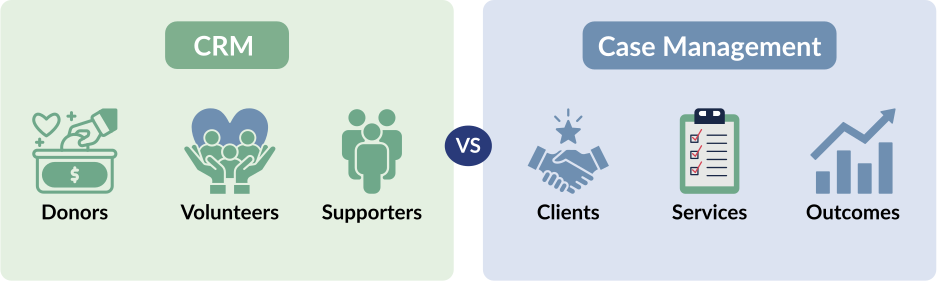
Understanding the difference between CRM vs case management software helps organizations choose the right tools for managing data, improving workflows, and supporting their mission.
This article explains the differences between CRM vs case management systems, when organizations use each type of platform, and how nonprofits determine which solution best supports their programs.
Key Takeaways
-
CRM software manages relationships with donors, supporters, and stakeholders.
-
Case management software tracks services delivered to clients or program participants.
-
Many nonprofits require both systems to manage supporters and service recipients.
-
Understanding CRM vs case management systems helps organizations choose the right technology.
What Is a CRM?
A CRM (Customer Relationship Management) system helps organizations manage relationships with external contacts. For nonprofits, this typically includes donors, volunteers, board members, partners, and other supporters.
CRM systems help organizations organize contact information, track communication history, and manage engagement with supporters.
Common CRM features include:
-
Contact and donor databases
-
Communication and outreach tracking
-
Email and campaign management
-
Fundraising tracking and reporting
-
Supporter segmentation
For many nonprofits, a CRM system serves as the central place for managing donor relationships and fundraising activity.
What Is Case Management Software?
Case management software (sometimes called a case management system) helps organizations track services delivered to individuals, document case activity, and measure program outcomes.
Unlike CRM platforms that focus on managing donor and supporter relationships, case management software supports service delivery workflows. Staff can record case notes, track program participation, coordinate services across teams, and monitor outcomes over time.
Case management systems are commonly used by organizations delivering services such as:
-
Human services programs
-
Housing and homelessness support
-
Disability services
-
Workforce development programs
-
Community health initiatives
Typical features include:
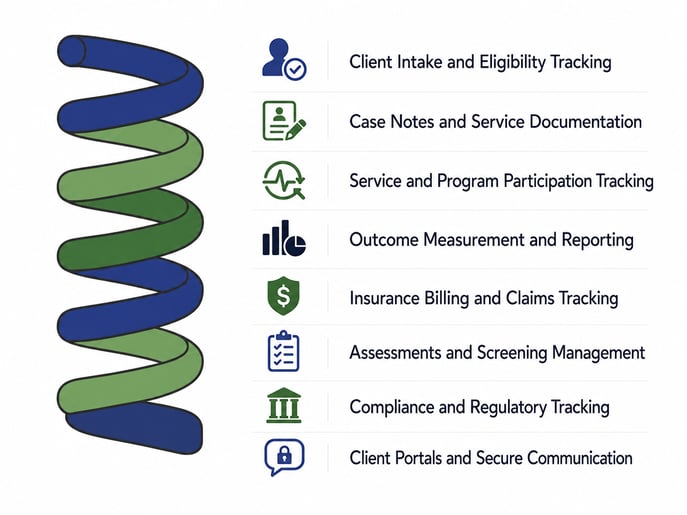
For organizations delivering social services or community programs, case management software provides the structure needed to track services and demonstrate program impact.
CRM vs Case Management Software: Key Differences
Understanding the difference between CRM and case management software is important for nonprofits that manage both donor relationships and service delivery programs.
Although both systems store information about people, they serve different operational purposes. CRM systems manage supporter relationships, while case management software tracks services delivered to clients or program participants.
|
Category |
CRM Software |
Case Management Software |
|
Primary Purpose |
Manage donor and supporter relationships |
Track services delivered to clients |
|
Data Managed |
Contact details, donation history, engagement |
Client records, case notes, services delivered |
|
Workflows |
Fundraising campaigns and communication |
Intake, service tracking, case documentation |
|
Reporting |
Donor engagement and fundraising performance |
Program outcomes and service reporting |
|
Security Requirements |
Standard permissions for managing donor, volunteer, and supporter information |
More granular permissions, restricted access, and audit trails for sensitive client records or HIPAA-related workflows |
Security is another important difference. CRM systems often manage donor, volunteer, and supporter data, while case management systems may store sensitive client records, case notes, assessments, eligibility information, or health-related details. For organizations subject to HIPAA or similar privacy requirements, case management software should support granular user permissions and audit trails that show who accessed or modified information.
Understanding these differences helps organizations determine which system best supports their operational needs.
When Nonprofits Use CRM Systems
CRM software is commonly used by organizations that need to manage supporter engagement and fundraising activity.
Typical use cases include:
-
Managing donor relationships
-
Tracking volunteer engagement
-
Coordinating fundraising campaigns
-
Communicating with supporters
-
Managing stakeholder contacts
For nonprofits focused on fundraising and supporter engagement, a CRM system provides the tools needed to build strong relationships and sustain funding.
When Organizations Need Case Management Software
Organizations delivering services directly to individuals often require case management software for nonprofits to track program activity and document outcomes.
Case management systems are frequently used in:
-
Social services organizations
-
Housing and homelessness programs
-
Workforce development initiatives
-
Disability support services
-
Community health programs
These organizations need systems that track client records, document services, and measure program outcomes across multiple interactions.
Why Many Organizations Need Both CRM and Case Management
One reason organizations search for CRM vs case management software is that they often manage both supporters and clients.
For example, a nonprofit may use a CRM system to manage donors and fundraising campaigns while also using case management software to track services delivered to program participants.
In these situations, the organization is managing two different types of relationships:
-
Relationships with supporters who fund the mission
-
Relationships with individuals receiving services
Understanding how these systems complement each other helps organizations design better data workflows and reporting processes.
Choosing the Right System for Your Organization
When evaluating CRM vs case management software, organizations should consider how they interact with the people they serve.
Questions that can help guide the decision include:
-
Does the organization primarily manage donor relationships or client services?
-
Are staff documenting services and outcomes for individuals?
-
Does the organization need detailed case notes or service tracking?
-
Is fundraising and donor engagement the primary focus?
Some nonprofits customize CRM platforms to support case management workflows by adding custom fields, workflows, or modules that track client services, program participation, or outcomes.
Other organizations choose hybrid platforms that combine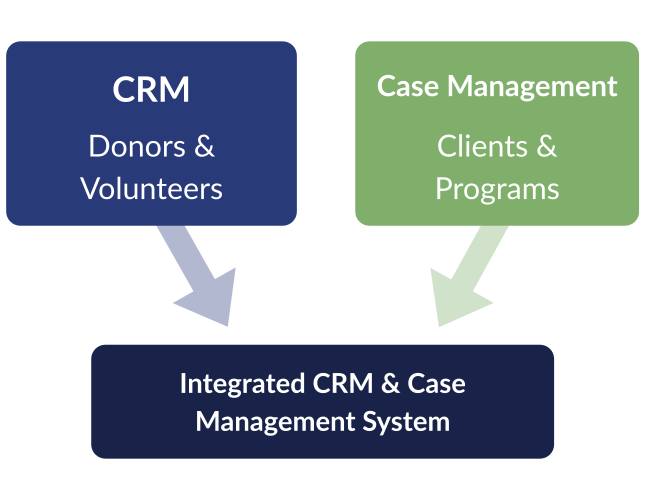
CRM and case management functionality within a single system.
Platforms like NewOrg, for example, allow nonprofits to manage relationships with donors, volunteers, and partners while also documenting services delivered to program participants.
For nonprofits delivering human services, workforce programs, or community initiatives, hybrid solutions can provide a more integrated way to manage both supporter relationships and client services.
Final Thoughts
Understanding the difference between CRM and case management software helps nonprofits and service organizations select tools that support both relationship management and program delivery.
CRM systems help organizations manage supporters and fundraising relationships, while case management software enables organizations to document services, track outcomes, and coordinate support for individuals.
By clearly identifying operational needs, organizations can choose technology that improves data organization, strengthens reporting capabilities, and supports long-term program impact.
.svg)