 A housing nonprofit notices that more families are calling about eviction notices. A workforce program sees referrals rise but participation stay flat. A food assistance provider hears from staff that clients keep asking about services the organization does not offer. In each case, leadership senses that something is changing, and the hard question is what to do about it.
Launching a new program, expanding a service, or redesigning an existing one on instinct is risky. Before committing staff time and funding, an organization needs to understand what the actual need is, who is experiencing it, what resources already exist, where service gaps remain, and which needs deserve priority.
A nonprofit needs assessment is a structured way to answer those questions before the program begins.
What Is a Nonprofit Needs Assessment?
A nonprofit needs assessment is a structured process for identifying the needs, strengths, resources, and service gaps affecting a population or community so an organization can make better-informed decisions about programs and services.
The findings can help determine which programs to develop, where to direct limited resources, which partnerships to pursue, and how to reach people who are not being served. They can also reveal opportunities to improve existing services, which is often where a needs assessment delivers the most immediate value.
Organizations typically conduct needs assessments when developing new programs, expanding into new communities, responding to changing conditions, or preparing funding proposals. They are also useful when participation is lower than expected or when long-running services may no longer match what clients need.
A needs assessment does not have to be a formal research project. Its scope should reflect the decision being made. A small change to an intake process might require reviewing existing data and speaking with a few staff members. Expanding into a new service area may justify broader community research involving surveys, interviews, public data, and partner organizations.
When Should a Nonprofit Conduct a Needs Assessment?
The most common trigger is a decision about something new: developing a program, entering a new community, or expanding to a new population. A needs assessment is also useful when community conditions shift, when participation is lower than staff expected, when a funder asks for evidence of need, or when an organization wants to confirm that long-running services still match what clients require.
The size of the assessment should match the size of the decision. A small adjustment to an intake process may call for a simple internal review of program data and a few staff conversations. Expanding into a new service area, on the other hand, may justify a broader community needs assessment that includes surveys, interviews, public data, and input from partner organizations. Spending months on research to answer a narrow question wastes capacity, and relying on a hunch for a major expansion wastes more.
Community Needs Assessment vs. Client Needs Assessment
Nonprofits use needs assessments at both the community and individual client levels, but each serves a different purpose. Community assessments identify broader needs and service gaps, while client assessments focus on the circumstances, challenges, and goals of an individual or household.
Population-Level
Looks across a community or target group.
FOCUS
A population or geographic area
KEY QUESTIONS
- What needs are most common?
- Who is underserved?
- Where are service gaps?
INFORMS
Program planning and resource allocation
EXAMPLE
Transportation barriers across a community
Individual-Level
Looks at one person or household.
FOCUS
An individual or household
KEY QUESTIONS
- What challenges does this client face?
- What services would be most helpful?
INFORMS
Individual service plans and case management
EXAMPLE
Transportation assistance for a specific client
HOW THEY CONNECT
Patterns across individual assessments can reveal needs that shape community programs.
How to Conduct a Nonprofit Needs Assessment
An effective nonprofit needs assessment begins with a clear question and progresses through gathering evidence, identifying service gaps, and determining which needs deserve attention.
The process does not need to be complicated, but each step should contribute to a specific decision the organization is trying to make.
1. Define the Question and Scope
"What does our community need?" is a reasonable starting point, but it is usually too broad to guide a useful assessment.
A more focused question connects the research to a specific challenge or decision. For example, a nonprofit might investigate why eligible households are not completing utility assistance applications, what prevents clients from finishing employment referrals, or which services older adults in a particular community need most. The question determines what information should be collected, who needs to participate, and which methods will be most useful.
It also helps establish the scope. An organization evaluating a single program may only need to examine internal records and gather feedback from participants. A nonprofit considering a major expansion may need to investigate community demographics, existing providers, service demand, and available resources. Defining these boundaries early prevents organizations from collecting information that does not contribute to a decision.
2. Include the Right People
Whose perspectives an assessment includes directly influences what the organization learns. Depending on the question, participants may include current and former clients, people who are eligible but not participating, frontline staff, case managers, community leaders, partner organizations, and other service providers.
Relying entirely on current clients or employees can create blind spots. Current participants have already found a way to access services. They may not represent people who struggled to enroll, were unaware that assistance existed, or encountered barriers before reaching the organization. Staff members understand day-to-day operations but may not see every challenge people experience before requesting assistance.
Including people outside the existing program can reveal obstacles that would otherwise remain hidden. It also gives organizations a more complete understanding of how services are experienced throughout the community.
3. Review Existing Data and Gather Additional Information
Before creating a survey or organizing interviews, organizations should examine the information they already collect. Intake records, demographic information, referral outcomes, waitlists, eligibility denials, service utilization, program completion rates, case notes, and client feedback can all provide useful evidence.
For example, a workforce program might discover that many clients receive employment referrals but never complete them. The existing data establishes the pattern, but it may not explain why participation stops. This is where combining quantitative and qualitative information becomes important.
Quantitative information helps organizations understand how many people are affected, how frequently a problem occurs, and whether conditions are changing.
Qualitative information provides context about people's experiences, the barriers they encounter, and what they believe would help.
Several common needs assessment methods can help gather this information:
- Surveys: Collect consistent responses from a larger group. Questions should be focused, understandable, and short enough to encourage participation.
- Interviews: Explore individual experiences in greater detail, particularly when an organization needs to understand why someone stopped participating or struggled to access services.
- Focus groups: Bring together people with shared experiences to discuss challenges and possible solutions. They may be less appropriate for sensitive subjects where participants could feel uncomfortable speaking openly.
- Existing program data: Reveal trends in service delivery, participation, referrals, and client outcomes.
- Community and public data: Provide broader context through census information, government reports, housing data, public health information, and other credible sources.
Returning to the workforce program example, referral records might show that participation drops after clients are connected with outside providers. Interviews could then reveal that transportation and appointment availability are the primary barriers. Neither source would provide the complete picture alone. The numbers reveal the extent of the problem, while client feedback explains what may be causing it.
Organizations should also consider how consistently their information has been recorded. Structured intake fields, standardized assessments, and organized case records are generally easier to analyze than scattered spreadsheets or unstructured notes. Any external statistics included in the assessment should come from credible sources and be verified before being used in reports or funding proposals.
4. Identify Community Strengths and Service Gaps
A needs assessment should examine more than the challenges facing a community. It should also identify resources, relationships, and services that are already working. A strengths and needs assessment considers existing programs, trusted community organizations, informal support networks, available resources, and local knowledge. These assets can shape the response just as much as the identified needs.
For example, if a trusted community organization already provides a particular service, expanding that partnership may be more effective than developing a competing program. Understanding existing resources also helps identify service gaps, which occur when a need is not being adequately met.
A service gap can exist because a program is unavailable, demand exceeds capacity, eligibility requirements exclude people, or services are difficult to access. Poor coordination between providers and limited awareness of available assistance can create additional barriers.
Consider a community with several behavioral health providers. The existence of those services might suggest that residents have sufficient access to care. However, long waitlists, limited transportation, and a lack of language support may prevent many people from receiving assistance.
The important question is not simply whether a service exists, but whether people can realistically access and benefit from it. Examining community strengths alongside service gaps helps organizations avoid duplicating existing efforts and identify opportunities for more coordinated support.
5. Prioritize the Needs That Matter Most
A needs assessment will often identify more challenges than an organization can realistically address. Prioritization helps translate those findings into a manageable plan. Organizations should consider the severity and urgency of each need, how many people are affected, whether other providers are addressing it, and how closely it aligns with their mission.
Available funding, staffing, operational capacity, and the organization's ability to make a meaningful difference also matter. For a smaller nonprofit, this may involve a structured discussion among leadership and program staff. A larger organization may use a scoring framework to compare potential priorities more systematically.
The process does not need to be elaborate. What matters is that decisions are based on the evidence collected rather than assumptions or predetermined solutions. Clear priorities also make it easier to explain program decisions to staff, community partners, boards, and funders.
Turn Needs Assessment Findings Into Program Decisions
A needs assessment becomes valuable when its findings influence what an organization actually does. One practical approach is to connect four elements: identified need, service gap, program response, and measurable outcome. This creates a clear path from understanding a problem to developing a solution.
Consider a nonprofit utility assistance program. The broader need is that families are struggling to maintain utility service, but application records reveal that many eligible households begin requesting assistance without completing the required documentation. Rather than immediately expanding financial assistance, the organization investigates why applications remain unfinished.
Through client feedback, staff discover that documentation requirements are confusing and that some households struggle to submit the necessary information. The nonprofit can then develop a targeted response, such as simplifying instructions, providing application support, introducing automated reminders, or making documents easier to submit.
To evaluate these changes, the organization can track the percentage of eligible households that complete applications and successfully receive assistance. This connects the initial findings to a measurable result and helps determine whether the program adjustments are effective.
The progression is straightforward:
Families in the community are struggling to maintain utility service.
Many eligible households begin applications but struggle to complete the required documentation.
Simplify application instructions, provide staff support, and introduce reminders to help households complete the process.
Track the percentage of eligible households completing applications and successfully receiving assistance.
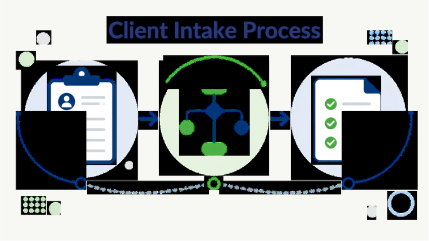
This approach helps organizations distinguish between identifying a problem and selecting an appropriate intervention. It also connects needs assessment to the broader service delivery process, where client intake identifies individual circumstances, case management coordinates services, and outcome measurement evaluates results.
For additional guidance on evaluating program results, see NewOrg's article Turning Results Into Data: How Nonprofits Can Measure Outcomes.
How Needs Assessments Support Grant Applications
Funders often want evidence that a proposed program addresses a documented need. A nonprofit needs assessment can help establish who is affected, how widespread the challenge is, which services are currently available, and why the proposed response is appropriate. Findings from an organization's own programs can be particularly useful when paired with credible public data.
For example, a housing nonprofit requesting funding for eviction prevention services could combine local housing statistics with its own records showing increased requests for assistance, application barriers, or unmet demand. This provides a more specific justification for the proposed program than a general statement about housing insecurity.
Needs assessment findings can also inform program objectives, proposed activities, resource requirements, and the outcomes an organization intends to measure. However, an assessment should not be designed backward to support a funding opportunity the organization has already decided to pursue. Its primary purpose is to determine what the community needs and whether the proposed response makes sense.
For more information about connecting program planning with funding activities, see NewOrg's guide to the nonprofit grant lifecycle.
Common Nonprofit Needs Assessment Mistakes
One of the most common mistakes is beginning with a predetermined solution and treating the assessment as a way to justify it. When an organization has already decided which program to launch, it may focus on evidence that supports the decision while overlooking information that suggests another approach would be more effective.
A needs assessment should leave room for unexpected findings, including the possibility that improving an existing service or strengthening a partnership is preferable to creating something new. Other common mistakes include relying only on current clients, asking overly broad questions, overlooking community resources, and collecting information without a clear plan for how it will be used.
Organizations can also underestimate the importance of keeping assessments current. Community conditions, service availability, funding, and client circumstances change over time, meaning findings from several years ago may no longer reflect the population being served. Revisiting assessment findings periodically helps ensure programs remain aligned with changing needs.
The goal is not to produce the longest possible report, but to gather enough reliable information to support decisions and identify practical next steps.
How Technology Can Support Nonprofit Needs Assessments
Even when organizations collect useful information, connecting it across programs can be difficult. Survey responses may live in one system, intake information in another, referrals in spreadsheets, and program outcomes in reports assembled manually. When information is fragmented, identifying trends across services becomes time-consuming and makes it harder to evaluate whether program changes are addressing the needs originally identified.
A configurable case and data management platform can help bring this information together through customizable forms, structured intake fields, demographic tracking, referral management, dashboards, and reporting across programs. These capabilities allow organizations to collect information more consistently and identify patterns that may otherwise go unnoticed.
For example, a nonprofit might use intake information to identify frequently reported needs, referral data to understand where clients encounter barriers, and outcome reports to evaluate whether program adjustments are improving results. Connecting these activities makes it easier to revisit needs assessment findings and adapt services as community conditions change.
NewOrg supports nonprofit and human services organizations with configurable forms, assessments, client records, referral tracking, and reporting. Organizations can adapt these tools to their programs and information requirements rather than relying entirely on fixed templates.
Technology does not replace conversations with clients, community engagement, or professional judgment. Instead, it helps organizations organize the evidence gathered through those activities and use it more consistently when making decisions.
A Simple Nonprofit Needs Assessment Template
A nonprofit needs assessment template can help organizations document their findings and connect research to program planning. The ten questions below can be adapted for a small program review or a broader community needs assessment, and a fillable PDF version is available after the framework.
Define & Research
Establish the purpose of your assessment and gather relevant information.
What are we trying to understand or decide?
Who is affected by the issue?
What information do we already have?
What questions remain unanswered?
Identify & Prioritize
Examine the evidence and identify where support is needed most.
What challenges or unmet needs have emerged?
What services, partnerships, and community assets already exist?
Where are needs not being adequately met?
Which needs should the organization address first, and why?
Plan & Measure
Turn your findings into action and evaluate the results.
What actions could address the identified gaps?
How will we determine whether the response is working?
Key takeaway: A needs assessment should help guide practical decisions. Revisit your findings as community needs and program conditions change.
For a smaller program-level assessment, a completed version of this template may fit on a single page. A larger community assessment may require additional research, supporting data, and input from multiple stakeholders.
Regardless of the organization's size, the same principles apply: define the question, gather relevant evidence, identify gaps, prioritize findings, and connect the results to measurable actions. Once a response has been implemented, organizations should revisit their findings to determine whether the identified need is being addressed or whether further changes are necessary.
Conclusion
A nonprofit needs assessment is more than a research exercise. It helps organizations understand what people need, recognize where existing services fall short, and determine how limited resources can make the greatest difference.
Organizations rarely have perfect information before making program decisions, and they do not need it. The purpose of a needs assessment is to replace assumptions with better evidence, clearer priorities, and a practical plan for responding to community needs.
NewOrg helps nonprofit and human services organizations connect assessments, intake, client records, services, referrals, outcomes, and reporting in one configurable system. By bringing this information together, organizations can better understand changing community needs and make more informed decisions about the programs and services they provide.