.png?width=175&height=50&name=NewOrg%20Logo%20(3).png)
Grant funding helps nonprofits, community organizations,.svg) and public agencies expand programs and serve their communities. However, receiving funding is only part of the process. Organizations are also expected to clearly demonstrate how funds were used and what outcomes were achieved.
and public agencies expand programs and serve their communities. However, receiving funding is only part of the process. Organizations are also expected to clearly demonstrate how funds were used and what outcomes were achieved.
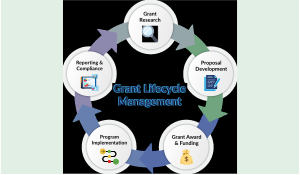
Strong grant reporting plays a critical role in maintaining accountability, building trust with funders, and supporting future funding opportunities. As part of the broader grant lifecycle, a well written report helps organizations demonstrate how funding translates into measurable impact.
This article explains what grant reports are, how they are typically structured, and how organizations can approach writing reports that are both clear and effective.
What Is a Grant Report
A grant report is a document submitted to a funder that explains how grant funds were used and what results were achieved during a specific reporting period. These reports help funders evaluate whether the funding was used as intended and whether the program delivered meaningful outcomes.
Depending on the grant, reports may be required quarterly, annually, or at the conclusion of a project. While requirements vary, most funders expect a combination of program updates, outcome data, and a financial overview.
Organizations that consistently provide clear and thoughtful reports are better positioned to build long term relationships with funders and demonstrate the value of their work.
Grant Report Format
While each funder may have specific requirements, most grant reports follow a similar structure. Maintaining a consistent format helps ensure information is organized, easy to review, and aligned with expectations.
A typical report includes a program overview, a summary of activities completed, an explanation of outcomes and impact, a financial summary, a discussion of any challenges, and an outline of next steps. Following a clear structure allows organizations to present information in a way that is both logical and easy to follow.
.svg)
Program Overview
The program overview provides context for the report by briefly describing the purpose of the program and the population it serves. This section should connect back to the original goals of the grant and define the timeframe covered in the report.
Establishing this context early helps funders quickly understand what the program is designed to achieve and how the reported activities fit within that broader mission.
Activities Completed
This section focuses on what took place during the reporting period. It should clearly describe the services delivered, events conducted, or initiatives carried out as part of the program.
Rather than listing every detail, the goal is to highlight the most relevant activities supported by the grant and demonstrate how funding translated into real program delivery.
Outcomes and Impact
Outcomes are central to any grant report because they show the results of the work performed. This section should focus on measurable progress and clearly demonstrate how the program made a difference.
Including specific data helps strengthen the report and provides evidence that the program is achieving its intended goals. When possible, connecting those outcomes to broader community impact adds additional clarity and meaning.
Real-world examples, like this Generation Power CT whitepaper, demonstrate how organizations can use data to track grant allocation, improve reporting accuracy, and measure program impact at scale.
Budget Summary
The budget summary explains how grant funds were used during the reporting period. While it does not need to include every expense, it should provide a clear overview of how resources supported program activities.
A well written financial summary reinforces transparency and shows that funding was managed responsibly and aligned with the approved proposal. Tools that support reporting and financial tracking can make this process more efficient and accurate, especially when managing multiple funding sources.
Challenges and Adjustments
Most programs encounter challenges, and funders generally expect to see how organizations respond to them. This section should explain any obstacles that arose and how they were addressed.
Providing this level of transparency demonstrates adaptability and shows that the organization remained focused on achieving program goals despite any difficulties.
Future Plans
The final section of the report looks ahead. It outlines how the program will continue to evolve, including planned improvements, expanded services, or new partnerships.
This forward looking perspective helps funders understand how their investment contributes to long term impact and sustainability.
Do All Grant Reports Look the Same?
Some funders provide structured reporting forms that must be completed as part of the reporting process. These forms often include predefined fields, prompts, and required information to ensure consistency across submissions.
While these formats may appear different from traditional reports, they still rely on the same core components, including program activities, outcomes, financial summaries, and future plans. Many organizations use a structured report format internally and then adapt that information to fit the specific requirements of a funder’s reporting form.
Common Grant Reporting Mistakes
Even well executed programs can fall short in reporting if key details are unclear. One common issue is relying too heavily on general descriptions without clearly demonstrating results. Funders are looking for evidence of change, not just a summary of activities.
Another challenge arises when reports drift away from the original proposal. When there is a disconnect between what was funded and what is reported, it can create uncertainty about how resources were used. Keeping reporting aligned with initial objectives helps maintain consistency and credibility.
Financial summaries can also become difficult to interpret if they lack clear connections to program delivery. When funders can easily see how resources supported outcomes, it reinforces confidence in both the organization and the program.
Tips for Writing a Strong Grant Report
Effective grant reports are clear, focused, and purposeful. Strong writing avoids unnecessary complexity and presents information in a way that is easy to understand while still providing meaningful detail.
Combining data with context strengthens the overall narrative. While numbers demonstrate progress, explanation helps funders understand why that progress matters. This balance allows reports to communicate both performance and impact.
It is also important to consider the perspective of the funder. Aligning the report with their expectations and priorities ensures that the most relevant information is highlighted and reinforces a positive working relationship.
Grant Report Checklist
Before submitting a report, reviewing the full document helps ensure that all key elements are clearly addressed. The report should present a complete picture of the program, including what was planned, what was delivered, and what results were achieved.
This includes confirming that outcomes are supported by data, financial information is clearly connected to program activity, and any challenges are explained with transparency. Ensuring that each section flows logically into the next helps create a report that is both accurate and easy to follow.
A thorough review also helps identify any gaps or inconsistencies before submission, improving the overall quality of the report.
Simplifying Grant Reporting with the Right Tools
As reporting requirements grow, managing program data across multiple systems can become time consuming and difficult to maintain. Gathering information manually often leads to inconsistencies and delays, especially when teams need to compile data from different sources.
A centralized grant management system can help streamline reporting by organizing program data, service delivery, and outcomes in one place. This makes it easier to track progress, generate reports, and ensure that information remains consistent over time.
With a more structured approach to data management, organizations can focus less on compiling information and more on clearly demonstrating the impact of their work.
Grant Report Example
Below is a simplified example of how a grant report can be structured to clearly present program activities, outcomes, and financial details.
.png?width=579&height=900&name=Learning%20Hub%20Pictures%20(14).png)